The Organizational Digital Twin gives you the structural clarity to deploy AI at scale - before committing to a single change.
ODC-Accenture Prize - Best Practice-oriented Paper, Journal of Organization Design. The methodology behind the Organizational Digital Twin is field-tested and academically recognized.
Read the paper →
◆
◆
◆
◆
◆
◆
◆
◆
◆
◆
◆
◆
◆
◆
◆
◆
◆
◆
◆
◆
◆
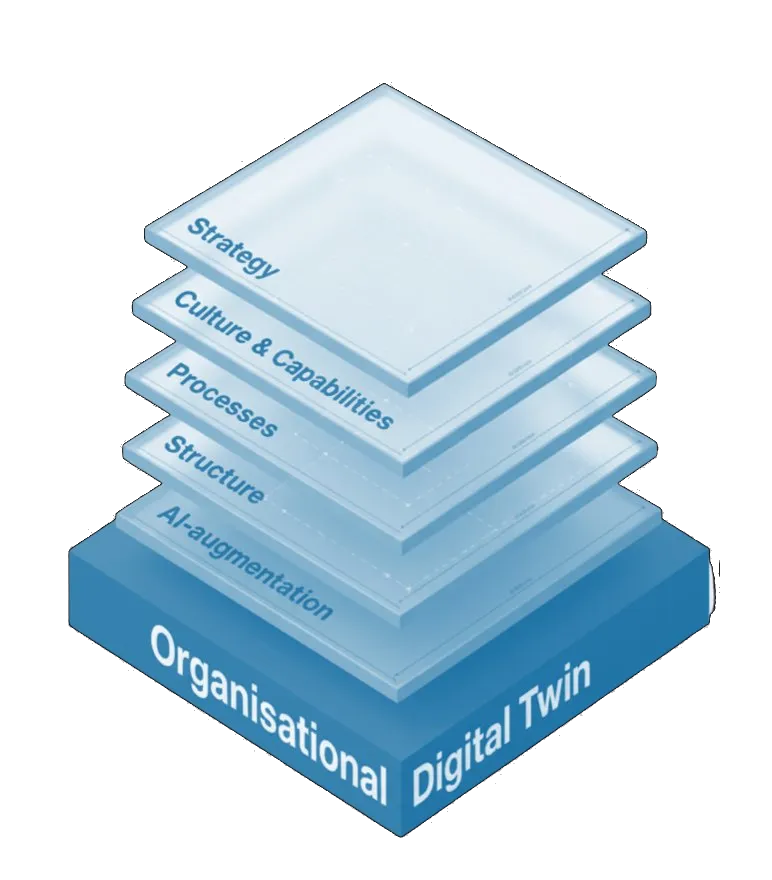
◆ Maps your organization the way engineers map complex systems - making structure visible, measurable, and redesignable. AI can't scale inside what it can't see.
Five layers. One living model. The full system, not a slide deck.
One platform. Three phases. We do the modeling. Your organization owns the outcome.
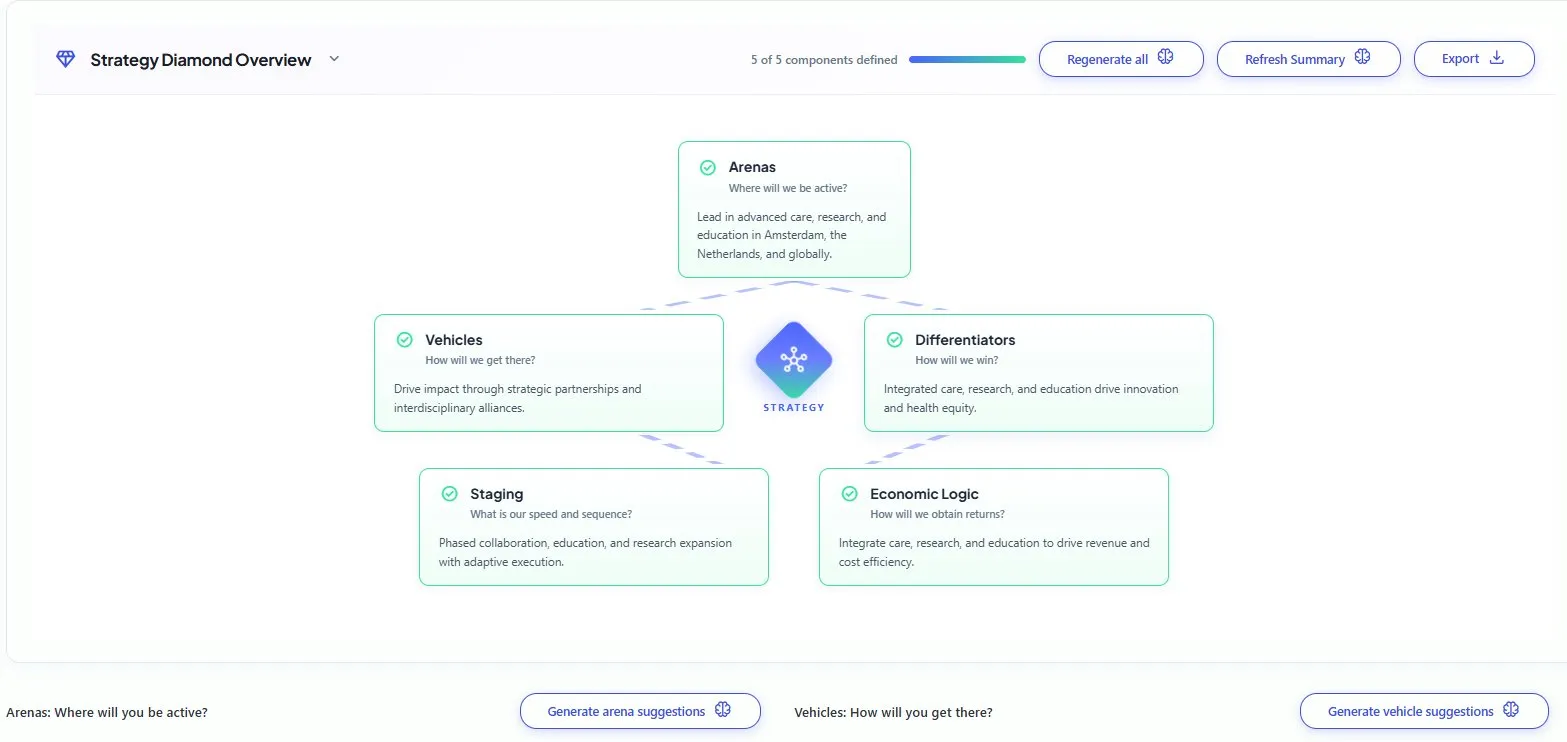
We start with where you want to go. Based on your mission and strategy, the Organizational Digital Twin designs your target operating model - where AI works, where humans lead, and how both connect across your value streams. The result is a precise, AI-ready blueprint for your organization.
Future state defined before current-state analysis begins
Explicit framework for what AI handles and what humans own
Agreed principles for evaluating every structural option
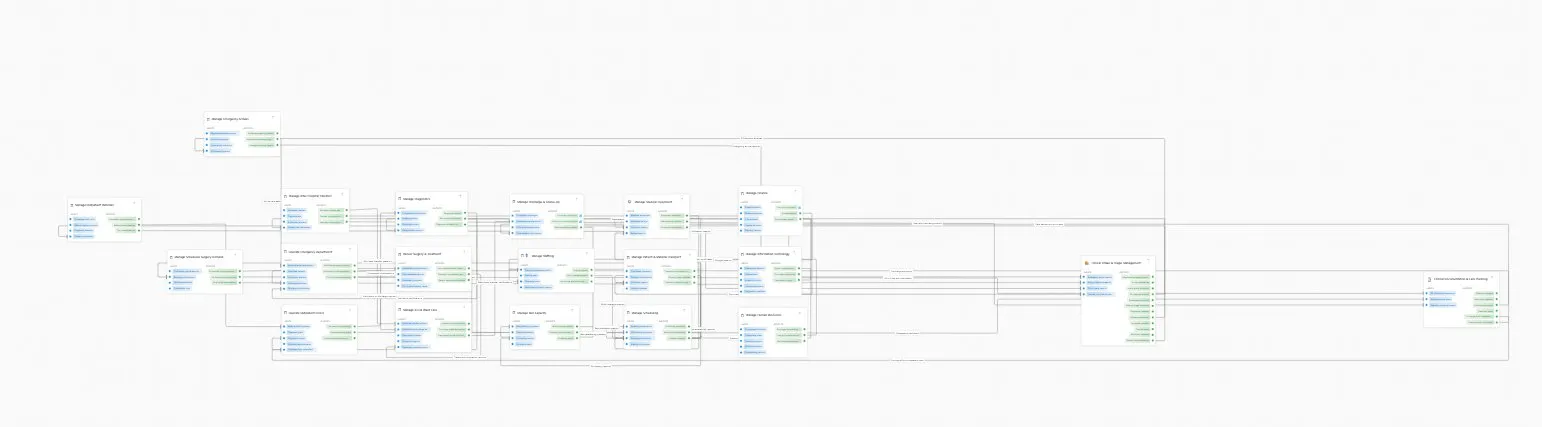
With the target operating model defined, we map your current state in detail - who works with whom, on what, and how decisions flow through the organization. The Organizational Digital Twin ingests your structural data and reveals the friction and inefficiencies that are invisible to the naked eye. This is the foundation on which the Develop module builds.
Maps dependencies - surfaces hidden coordination overload and friction points
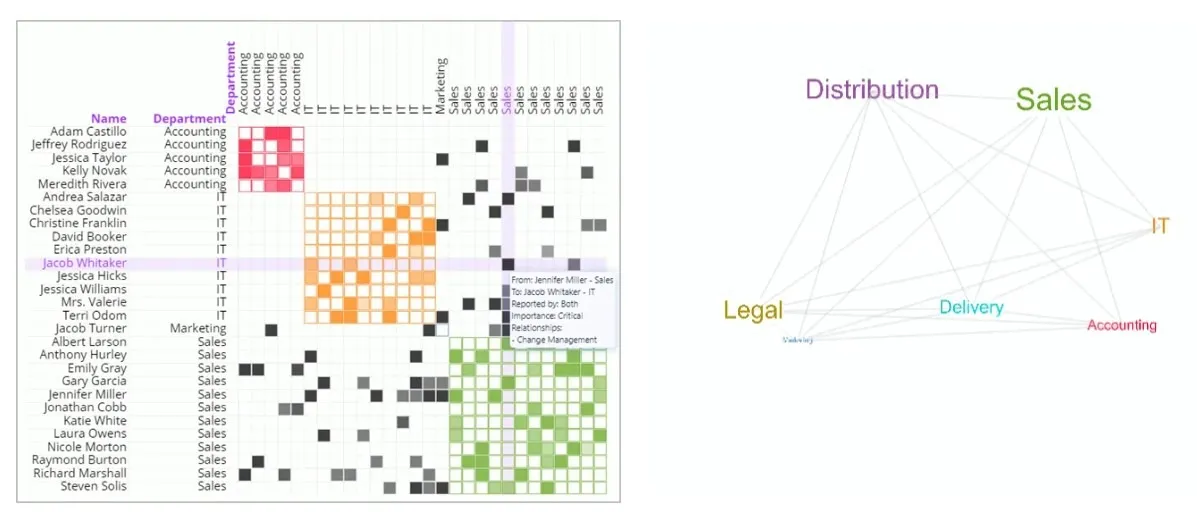
Maps every dependency between roles and functions - making invisible coordination load visible
Scores every function: FTE, AI hours per month, coordination load
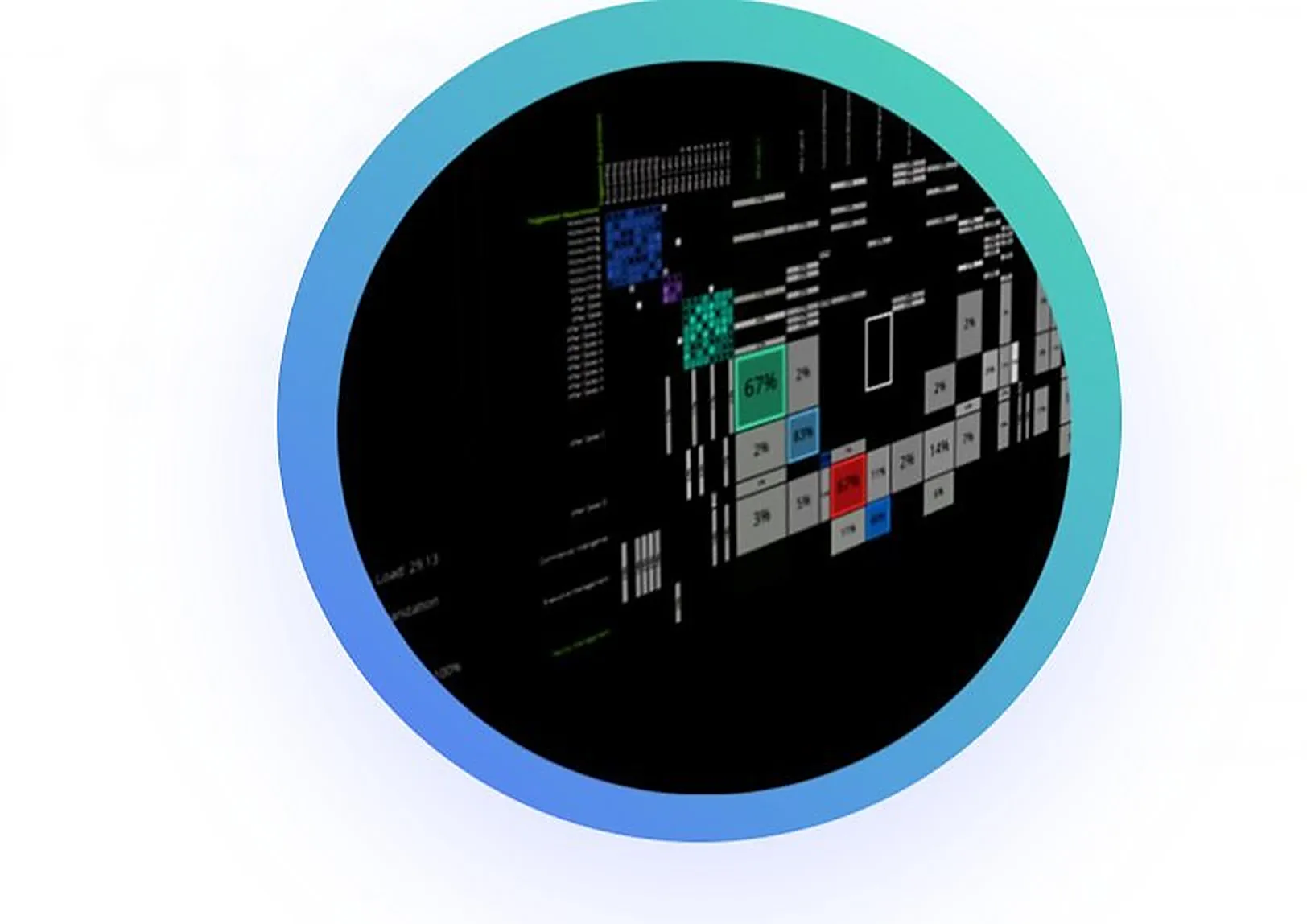
Each cell is a coordination touchpoint between two people. Diagonal blocks show within-department coordination; off-diagonal cells expose cross-functional load. The network view on the right summarizes the same data as a high-level map.
With target and current state both modeled, the Organizational Digital Twin calculates the delta - quantifying cost savings, capacity release, and AI opportunity by function. The output is a board-ready business case and a phased transformation roadmap, built on evidence rather than assumption.
Thousands of configurations evaluated - optimal structure surfaced
Delta analysis, cost model, phased milestones - board-ready
Structured delivery with capability transfer built in
The transformation gap, quantified - every gap plotted by impact vs effort - and the phased roadmap that closes them, with costs and value modeled wave by wave.
Every organization faces the same challenge: where to apply AI, where to rely on people, and how to integrate both. Reconfig defines that blueprint - prioritized by value, tested through simulation - before execution begins.
Before any deployment decision, Reconfig scores each team: Total FTE, AI potential in hours per month, span of control, and coordination load. Know exactly where AI delivers value.
Total FTE, AI h/month, coordination load - quantified before deployment
Functions ranked by impact, effort, and risk - so investment goes where it returns the most
The platform identifies which tasks AI handles and which require human judgment - with expected impact and risk labelled for each function. Every recommendation is explainable and testable.
AI tasks vs human tasks with expected impact and risk per function
Every AI output has a clear human owner - no governance gaps
Reconfig translates structural change into a board-ready business case: cost of inaction, sources of value, and total annual benefit - every euro tied to a specific lever in the redesign.
Cost of inaction, sources of value, and ROI - modeled per function
Each value driver maps to a funded initiative in the transformation roadmap
A 60-minute executive session. We'll bring a simulation of your organization built before the meeting - no internal data required, no commitment.